Katie Stone
Rage, Limited: The Disappointment of Guillermo del Toro’s Frankenstein
A review of del Toro’s 2025 adaptation of Frankenstein in which I argue that del Toro has stripped away the revolutionary potential of Shelley’s text by robbing the Creature of his great rage at the injustice of the world.
Here at last is my strength.
Susan Stryker, ‘My Words to Victor Frankenstein Above the Village of Chamounix: Performing Transgender Rage’ (1994)
I am not the water-
I am the wave,
and rage
is the force that moves me

To actively work to build something that is thought of as undeniably undesirable and to try and reframe it to others as liberatory, is no small task
Mia Mingus, ‘Access Intimacy, Interdependence and Disability Justice’ (2017)
Katie Stone
Hollow Children: utopianism and disability justice
An article in which I read Mia Mingus’ short story ‘Hollow’ (2015) as an example of a disabled utopia, and draw on the politics of disability justice to explore utopianism’s fraught history with disability.
Beyond Gender
A Review of Sophie Lewis’ Abolish the Family: A Manifesto for Care and Liberation (2022)
A collectively written response to Lewis’ book where we discuss what science fiction scholars can learn from the politics of family abolition.
I’d wager that you, too, can imagine something better than the lottery that drops a neonate arbitrarily among one or two or three or four individuals (of a particular class) and keeps her there for the best part of two decades without her consent, making her wholly beholden to them for her physical survival, legal existence, and economic identity, and forcing her to be the reason they give away their lives in work.
Sophie Lewis, Abolish the Family (2022)


Welcome To… Eugenic Feminism
The tenth video in my series Welcome To… Dystopia.
In this video I return to Rose Macaulay’s What Not (2018) to look at the control of time in dystopias.
To do this I provide a more detailed examination of Asha Nadkarni’s Eugenic Feminism (2014). I talk through Nadkarni’s theory of how eugenics and feminism are intimately linked, I discuss how we can see these linkages in dystopias and how we might unlink them to create a reproductive utopianism.
[LINK FOR MORE INFO, EXERCISES AND READING SUGGESTIONS]
Welcome To… What Not
The ninth video in my series Welcome To… Dystopia.
I talk about Rose Macaulay’s What Not and how reproduction is controlled in dystopias. What are the real life forms of reproductive control that inspire dystopias? And how can dystopias help us to imagine better forms of reproduction?
[LINK FOR MORE INFO, EXERCISES AND READING SUGGESTIONS]
“I’d a long sight rather have to explain free love than love by Act of Parliament.”
Rose Macaulay, What Not (1918)
“When you’ve achieved one impossible the others
Sun Ra, ‘Reality has touched against myth’ (1969)
Come together to be with their brother, the first impossible
Borrowed from the rim of the myth
Happy Space Age To You. . .”
Sasha Myerson and Katie Stone
This Planet is Doomed? The Outer Limits of Language in the Science-Fictional Poetry of Sun Ra
A collaboratively written book chapter about the poetry of citizen of Saturn, Sun Ra, inspired by his film Space is the Place (1974). Sasha and I argue that Ra offers an anti-capitalist, decolonial, utopian vision of science fiction.
This chapter was based on a paper we gave at Corroding the Now: Poetry + Science/SF (2019)
Welcome To… Capital
The seventh video in my series Welcome To… Dystopia.
In this video I return to Boots Riley’s Sorry To Bother You (2018) to look at the control of time in dystopias.
To do this I provide a more detailed examination of Karl Marx’s Capital, Volume One (1867). I talk through Marx’s discussion of the various methods which capitalists use to exploit workers’ time, how we can see these methods of exploitation in dystopias and what different possible futures of labour might look like.
[LINK FOR MORE INFO, EXERCISES AND READING SUGGESTIONS]
“In handicrafts and manufacture, the workman makes use of a tool, in the factory, the machine makes use of him.”
Karl Marx, Capital, Volume One (1867)

“You want to make some money here? Then read your script with a white voice […] It’s not really a white voice. It’s what they wish they sounded like.”
Boots Riley, dir., Sorry To Bother You (2018)
Welcome To… Sorry To Bother You
The seventh video in my series Welcome To… Dystopia.
I talk about Boots Riley’s Sorry To Bother You and how time is controlled in dystopias. What are the real life forms of time control that inspire dystopias? And how can dystopias help us to imagine better times?
[LINK FOR MORE INFO, EXERCISES AND READING SUGGESTIONS]
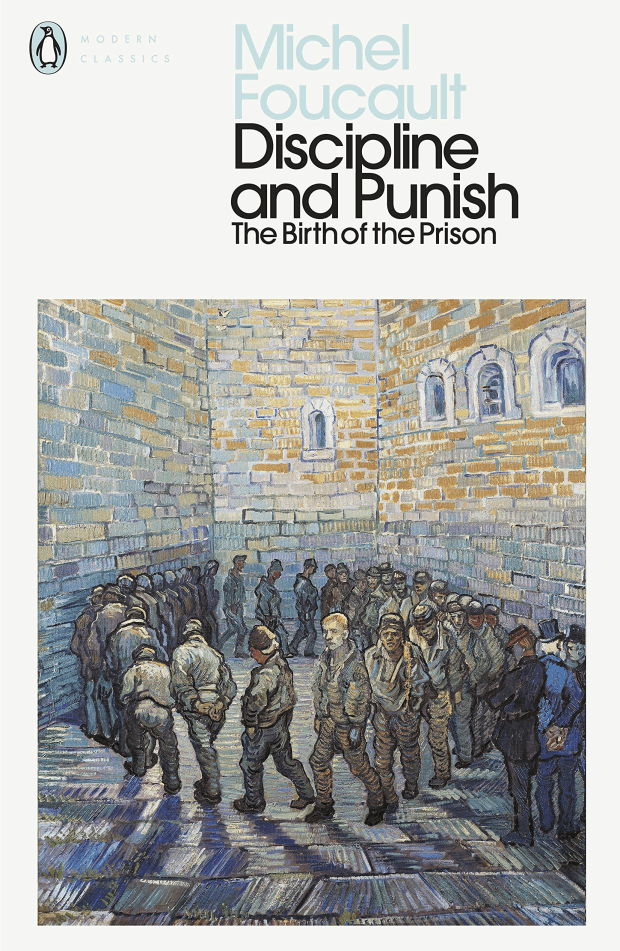
Welcome To… Discipline and Punish
The sixth video in my series Welcome To… Dystopia.
In this video I return to Yevgeny Zamyatin’s We (1924) to look at the control of space in dystopias.
To do this I provide a more detailed examination of Michel Foucault’s Discipline and Punish (1975). I talk through Foucault’s understanding of how prisons differ from other spaces of punishment, how these spaces of punishment relate to dystopias and whether we can find ways to struggle against them and towards utopia.
[LINK FOR MORE INFO, EXERCISES AND READING SUGGESTIONS]
“The right to punish has been shifted from the vengeance of the sovereign to the defence of society.”
Michel Foucault, Discipline and Punish (1975)
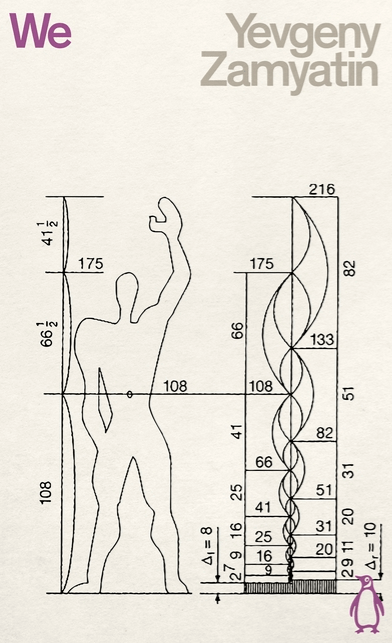
“O, mighty, divinely delimited wisdom of walls, boundaries! It is perhaps the most magnificent of all inventions.”
Yevgeny Zamyatin, We (1924)
Welcome To… We
The fifth video in my series Welcome To… Dystopia.
I talk about Yevgeny Zamyatin’s We (1924) and how space is controlled in dystopias. What are the real life spaces that inspire dystopias? And how can dystopias help us to imagine better spaces?
[LINK FOR MORE INFO, EXERCISES AND READING SUGGESTIONS]
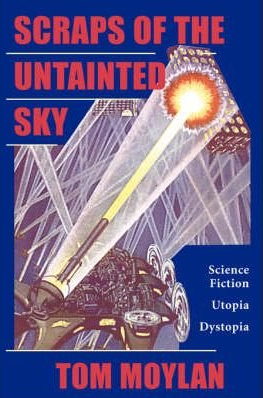
Welcome To… Scraps of the Untainted Sky
The fourth video in my series Welcome To… Dystopia.
In this video I return to Octavia E. Butler’s Parable of the Sower (1930) to look at the relationship between dystopia and utopia.
To do this I provide a more detailed examination of Tom Moylan’s book Scraps of the Untainted Sky (2000). I talk through Moylan’s vision of utopianism, how it relates to dystopianism and what he means by ‘the critical dystopia’.
[LINK FOR MORE INFO, EXERCISES AND READING SUGGESTIONS]
“If a reader can manage to see the world differently […] she or he might just, especially in concert with friends or comrades and allies, do something to alter it.”
Tom Moylan, Scraps of the Untainted Sky (2000)

“All that you touch
Octavia E. Butler, Parable of the Sower (1993)
You Change.
All that you Change
Changes you.
The only lasting truth
Is Change.
God
Is Change.”
EARTHSEED: THE BOOKS OF THE LIVING
Welcome To… Parable of the Sower
The third video in my series Welcome To… Dystopia.
I talk about Octavia E. Butler’s Parable of the Sower (1993) and the relationship between utopia and dystopia. What is a utopia? And what is the difference between dystopia and anti-utopia?
[LINK FOR MORE INFO, EXERCISES AND READING SUGGESTIONS]
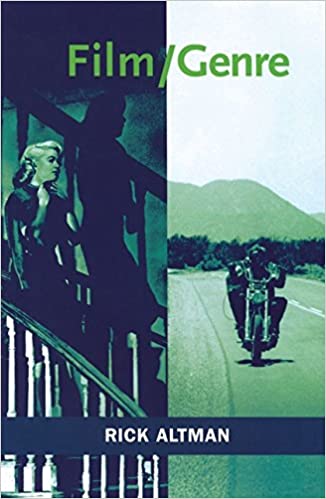
Welcome To… Film/Genre
The second video in my series Welcome To… Dystopia.
In this video I return to Lana and Lilly Wachowski’s The Matrix (1999) to take a deeper look at the question: “What is a genre?”
To do this I take another look at Rick Altman’s book Film/Genre (1999). I talk through Altman’s problem with traditional genre criticism, his method of classifying genres and the importance he places on how genre operates in practice.
[LINK FOR MORE INFO, EXERCISES AND READING SUGGESTIONS]
“Considered by itself, almost any genre breakdown will appear complete and logical. Only when compared to the exhibition system that sustains it does a particular generic configuration reveal its debt to exhibition institutions.”
Rick Altman, Film/Genre (1999)
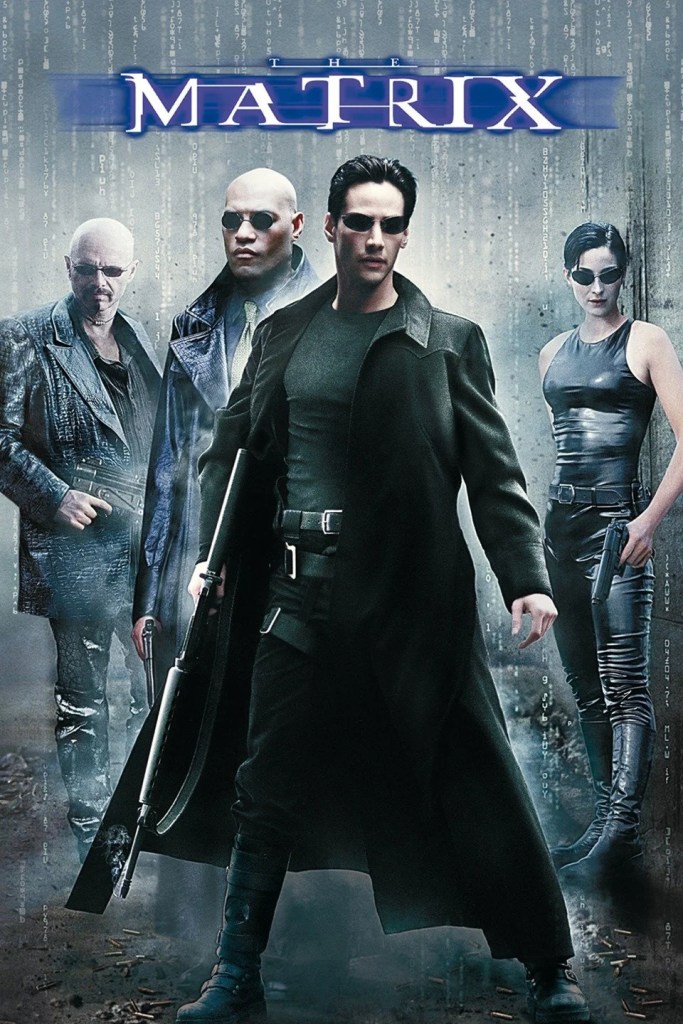
“You have a problem with authority, Mr. Anderson. You believe that you are special, that somehow the rules do not apply to you. Obviously you are mistaken.”
Mr Rhineheart, The Matrix (1999)
Welcome To… The Matrix
The first video in my series Welcome To… Dystopia.
I talk about The Matrix (1999) and the question of genre. What do we mean when we call a text a dystopia? And why do genre labels matter?
[LINK FOR MORE INFO, EXERCISES AND READING SUGGESTIONS]
Beyond Gender
Collective Close Reading: Queer SF and the Methodology of the Many
A collectively written chapter which uses Ursula K. Le Guin’s ‘The Shobies Story’ (1990) to reflect on the importance of collective practice for queer science fiction creation.
“Love doesn’t just sit there, like a stone, it has to be made, like bread; re-made all the time, made new.”
Ursula K. Le Guin, The Lathe of Heaven (1971)
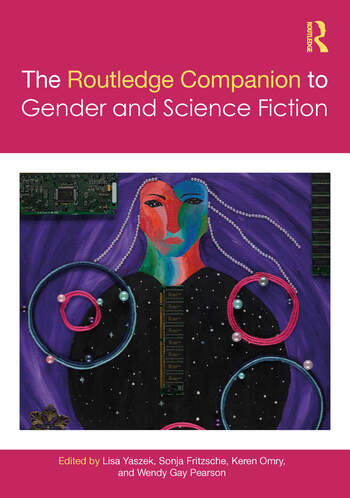
 Katie McGregor Stone